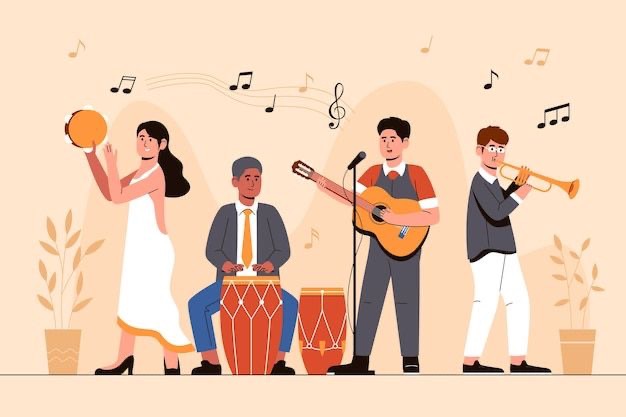
Young people’s social, emotional, and cognitive development are all positively influenced by musical instruction. This article delves into the many reasons why music education is crucial for kids’ all-around development and the many benefits it offers.
Music education is crucial in developing well-rounded persons because it improves academic achievement, creativity, and self-expression. Students’ academic performance improves when they engage in music programmes, according to research. This is especially true in reading and mathematics. Reason being, those parts of the brain responsible for logic, spatial intelligence, and language processing all get a workout when kids learn music.
Additionally, music education gives a stage for imaginative expression, enabling students to delve into their emotions and convey their ideas and sentiments via song. via musical expression, whether via original composition or the performance of works by other artists, students gain insight into themselves and the world.
Music education has many positive effects on students’ mental and emotional health, but it also helps them become better social beings and more collaborative members of society. Students develop friendships and respect for one another via group projects and performances in which they work together to achieve a shared objective. Beyond the music classroom, students’ social interactions and relationships are enhanced by this feeling of belonging and camaraderie.
As a whole, music education has a significant and long-lasting effect on youth, providing them with experiences and abilities that are very beneficial in many aspects of life. Programmes like “Harmonise” help young people develop into self-assured, accomplished adults by giving them opportunity to learn music in an approachable and interesting way.

 Harmonise